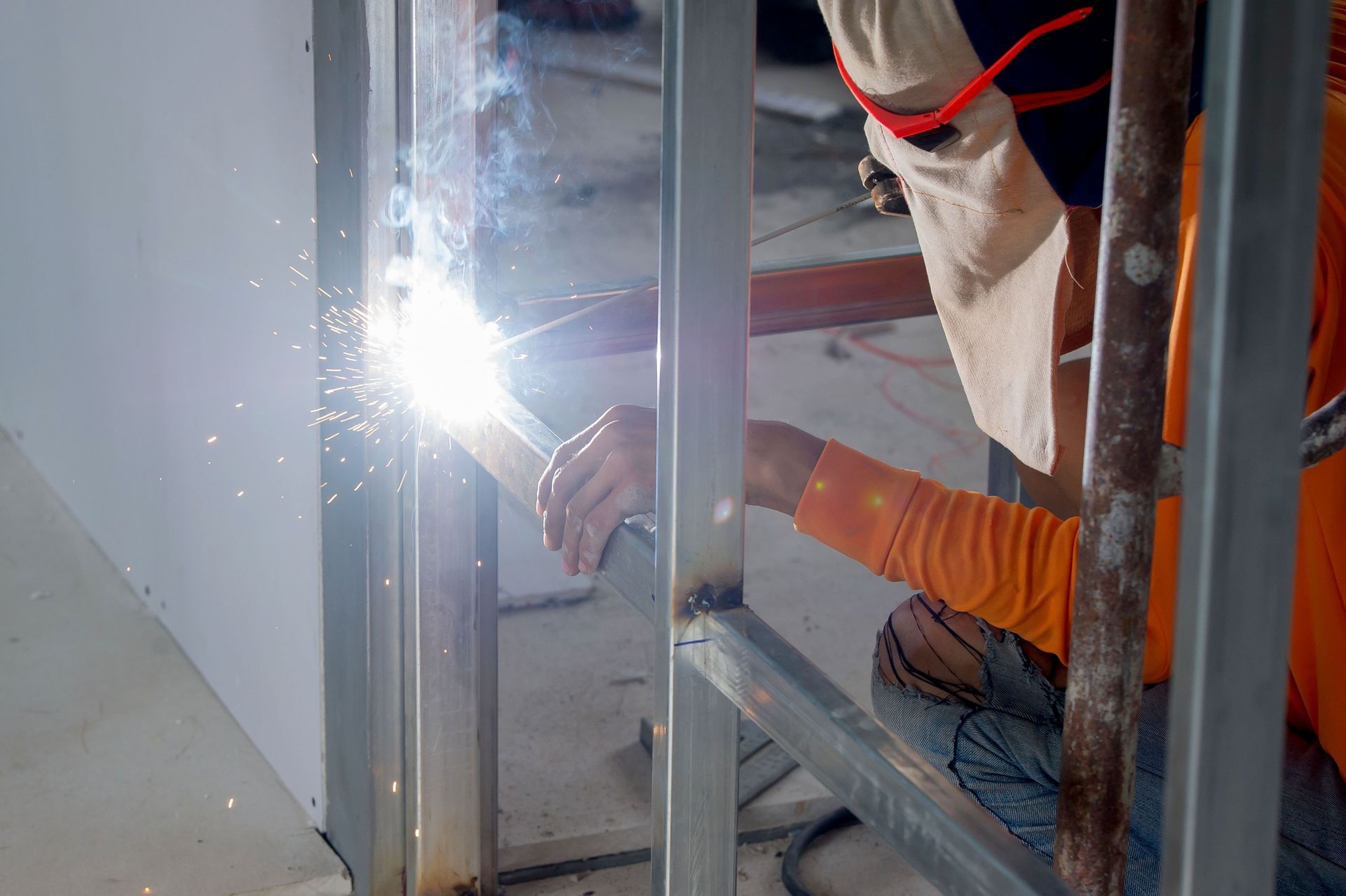
Metal equipment and structures eventually crack, corrode, or require modification, and when that happens you need someone who can join steel, aluminum, or iron components securely enough to handle the load and stress those parts will face in use. B&B Roofing & Construction provides welding services in Moody, addressing broken implement frames, damaged gates, trailer repairs, and custom fabrication for brackets, supports, and structural reinforcement. You get welds that hold under working conditions rather than cosmetic fixes that fail when load is applied.
The welding process begins with assessment of the break or fabrication requirement, including the type of metal, the thickness of the material, and the forces the joint will experience. The metal is cleaned and prepared to remove rust, paint, and contaminants that weaken the weld, then joined using the appropriate welding method for the material and application. For structural repairs, the weld must penetrate fully and match or exceed the strength of the original metal, which requires control over heat input, travel speed, and filler material selection.
Schedule a repair evaluation to determine whether the damaged component can be welded or requires replacement.
Welding in Moody for broken equipment, structural repairs, and custom fabrication
Repairs and Fabrication for Metal Components
Why Proper Welding Technique Matters
Welding quality depends on matching the process to the metal type, achieving full penetration without burning through thin material, and controlling distortion caused by heat concentration. Structural welds must fuse the base metal completely, creating a joint as strong as the surrounding material, while cosmetic or light-duty welds may prioritize appearance and surface finish over deep penetration.
After welding is complete, you'll see a joint that holds under load without cracking, a repair that doesn't sag or shift when weight is applied, or a fabricated component that fits precisely where it needs to mount. Properly executed welds show consistent bead appearance, no visible porosity or slag inclusion, and no heat-affected distortion that throws the part out of alignment or causes binding in moving assemblies.
Welding cannot restore metal that has rusted through entirely or repair cast iron components that have shattered under impact in most cases, since those materials either lack sufficient sound metal to fuse or require preheating and specialized filler rods beyond the scope of field repairs. When the base material is too degraded or the part has failed in a way that welding cannot address structurally, replacement is the more reliable solution.
Questions Before Starting Your Project
Welding is used to repair farm equipment, trailers, gates, and structural steel throughout Moody, and understanding what the process involves and what results to expect helps you assess whether welding is the right approach for your specific situation.
- What types of welding repairs are most common on rural properties? Gate hinge repairs, trailer frame cracks, broken implement hitches, fence post reinforcement, and custom brackets for mounting equipment or attaching accessories to vehicles and buildings are typical requests.
- How is the correct welding method chosen for a repair? The welder evaluates the metal type, thickness, and position of the joint, then selects stick, MIG, or TIG welding based on whether the work requires deep penetration, clean appearance, or the ability to weld thin material without burning through.
- Why do some welds crack or fail shortly after repair? Insufficient penetration, contamination from rust or paint, incorrect filler material, or failure to preheat thick sections can all cause weak welds that fracture when load is applied, especially if the joint experiences vibration or repeated stress cycles.
- What should you inspect after a welding repair is finished? Check that the weld bead is continuous without gaps, look for even color indicating consistent heat, confirm the part hasn't warped out of alignment, and test for flex or movement at the joint when light pressure is applied.
- How does material thickness affect welding difficulty and repair strength? Thicker material requires higher heat input and multiple weld passes to achieve full penetration, while thin metal demands precise control to avoid blow-through, meaning repair strength and process time vary significantly based on what you're working with.
B&B Roofing & Construction completes welding repairs and fabrication that restore function to damaged metal components and provide custom solutions for mounting, support, and structural reinforcement. Bring your broken equipment or fabrication requirements in for assessment and repair planning.